Shadowstone logo

What is Shadowstone

Shadowstone is a co-op tactical roguelite for 1–4 players that explores the darker side of the Sunderfolk universe. Master positioning, build hero synergies, and chain your skills to survive the horrors of the Sunderlands.

Summarized Contribution

  • Defined, pitched, and implemented Shadowstone's core combat system and enemy/biome design ruleset, creating systemic interactions that generate fresh tactical situations every round and run.
  • Owned design of 30+ enemies and 5 boss encounters from concept to release in 4-week cycles, defining each mechanic's core visual cues and collaborating with Art, Animation, and VFX to bring them to life.
  • Designed and implemented opt-in escalation systems where player choice, not skill, drives late-game difficulty, preserving the core loop while keeping new content relevant across runs.
  • Shipped content and balance patches on a 4-week cadence driven by live telemetry and player feedback.
  • Established cross-discipline enemy production pipelines with Engineering, Art, UX, and QA.
COMBAT DESIGN

Design Thesis

Enemies are an ecosystem, not a lineup of isolated threats. Every kit is built to feed into the others and the biome mechanics, so any combination the game spawns becomes a fresh, readable tactical puzzle every round and a new player story every run.

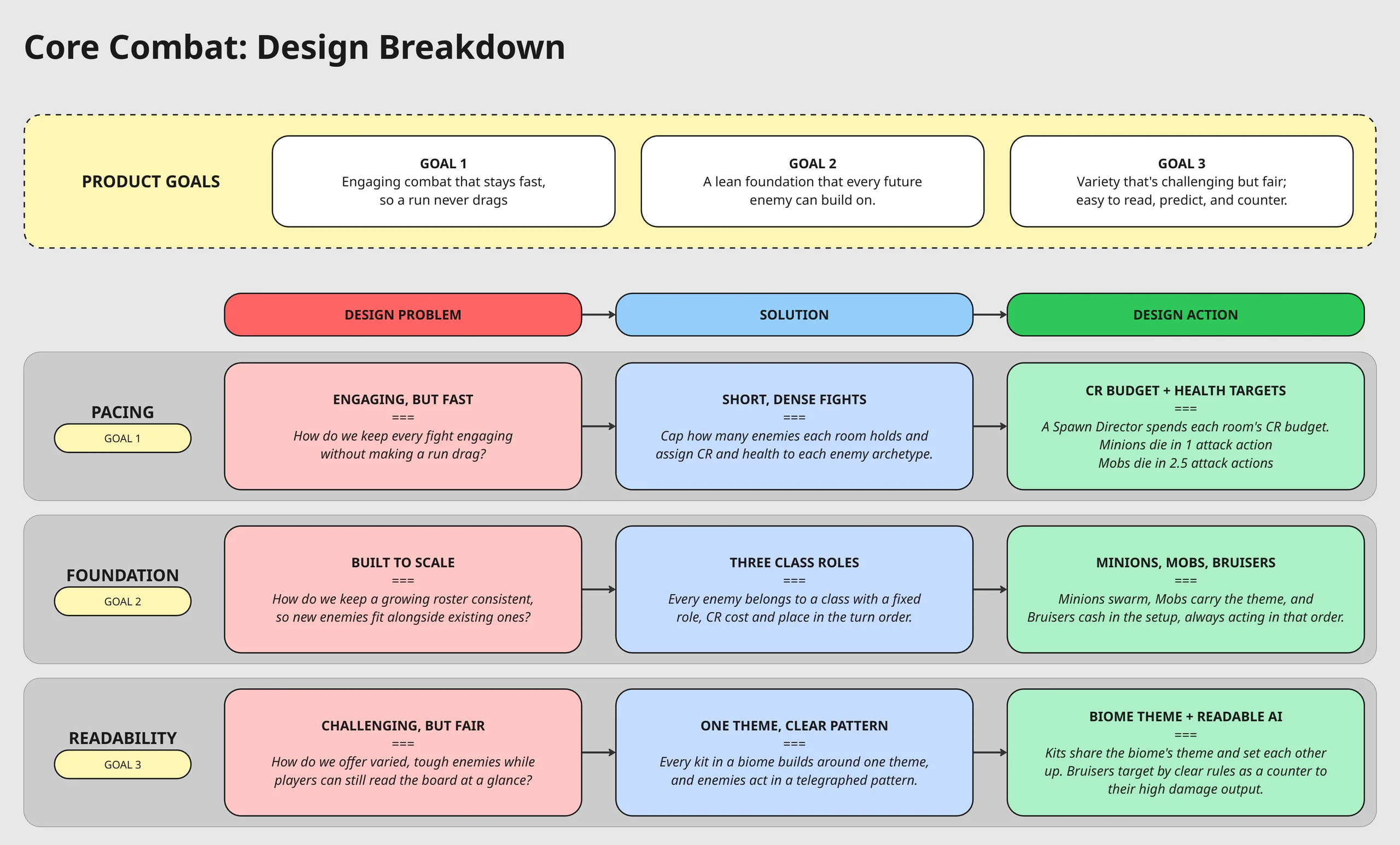
Core combat design breakdown: three product goals, and the pacing, foundation, and readability problems each traced to a solution and a design action
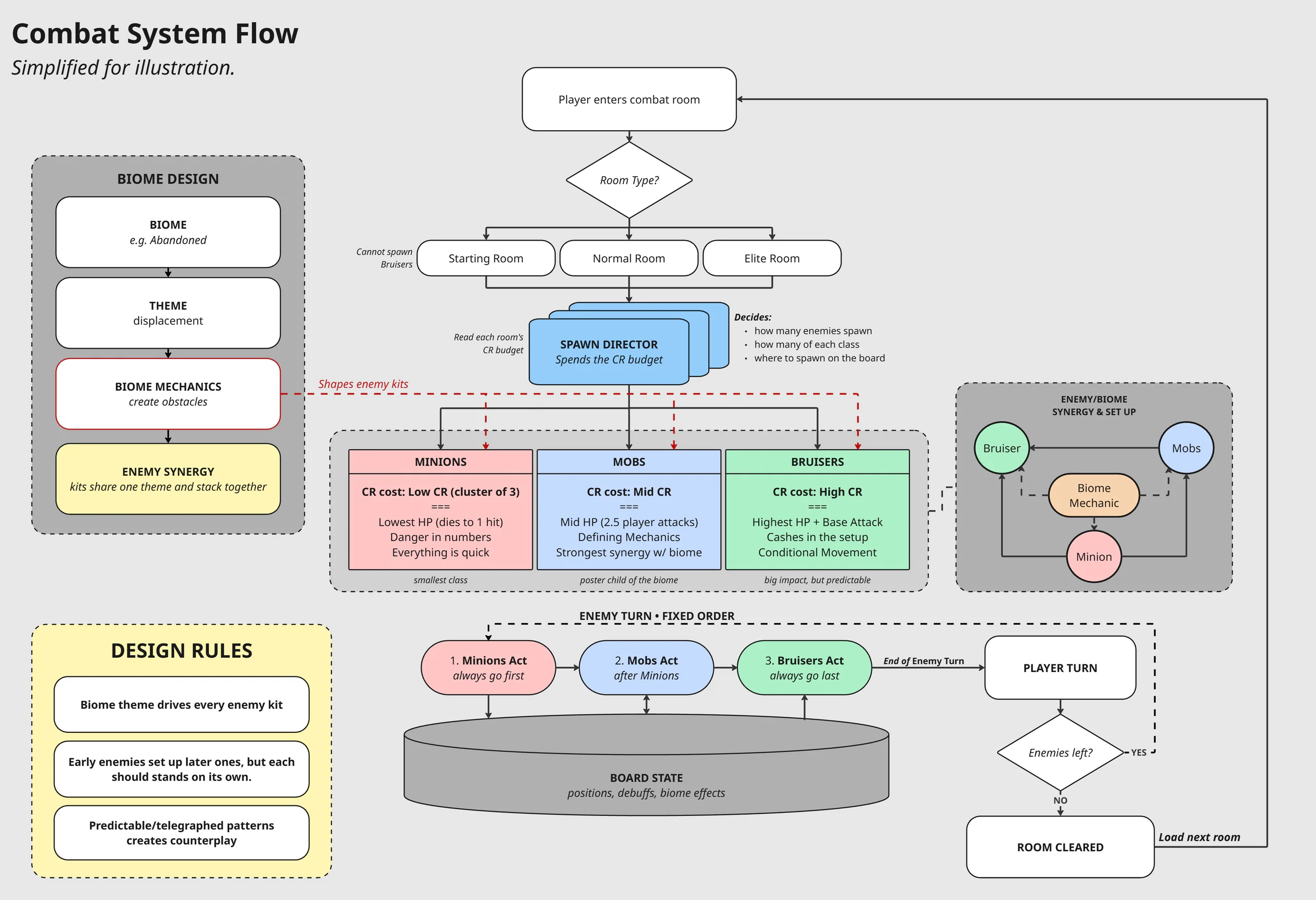
Combat System flowchart: the room budget drives the spawn director, Minions, Mobs, and Bruisers act in a fixed order on a shared board state, then the player counterplays
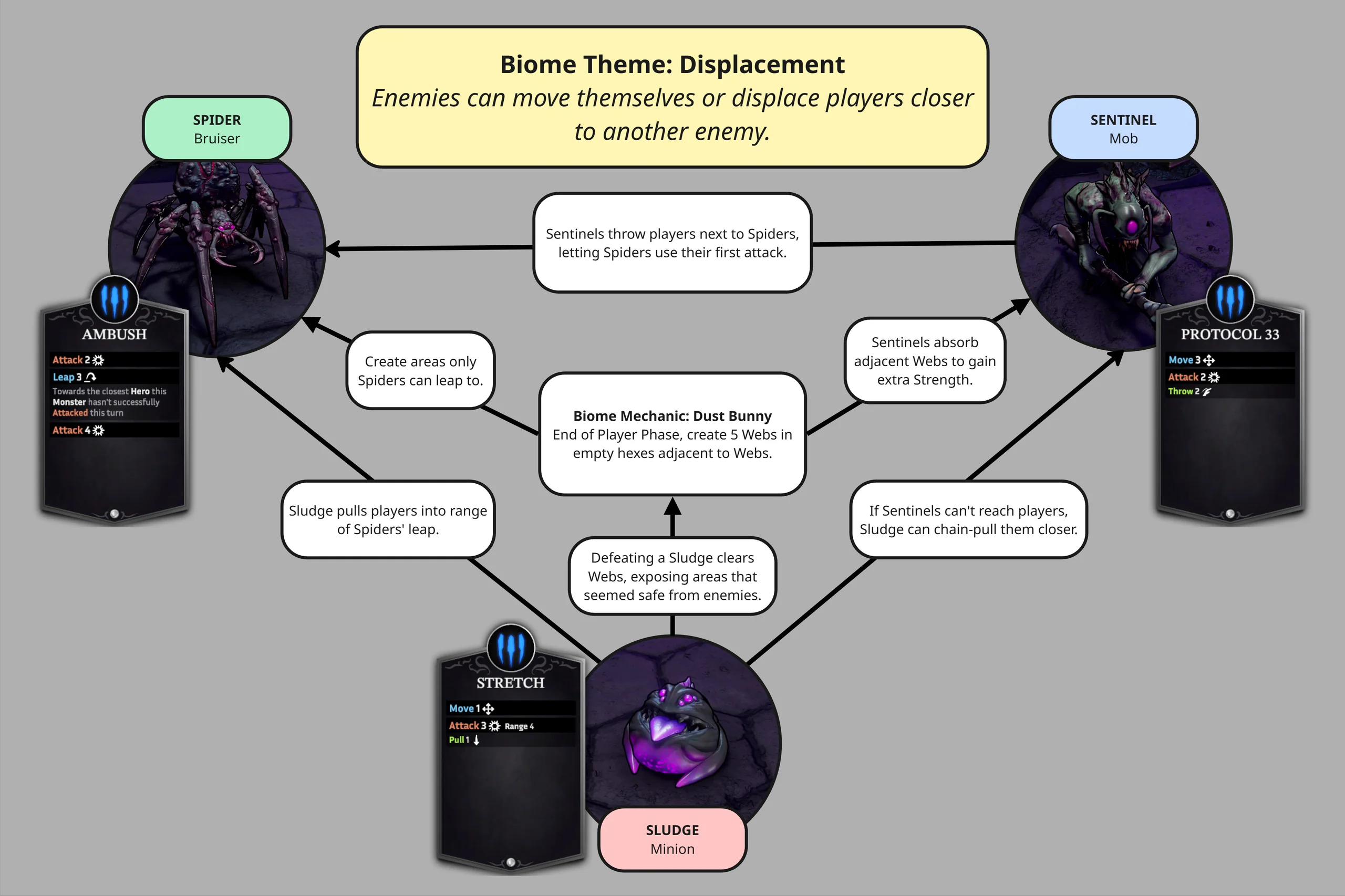
Displacement biome diagram: the Dust Bunny mechanic spreads Webs, and the Sludge (Minion), Sentinel (Mob), and Spider (Bruiser) kits pull, throw, and leap to set each other up

Example 1: Sludge

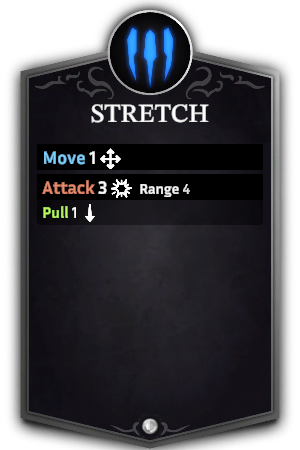
Its ranged attack pulls players off safe hexes and toward enemies that otherwise couldn't reach them.

Sludge's Stretch action card: Move 1, Attack 3 at Range 4, Pull 1

Example 2: Sentinel

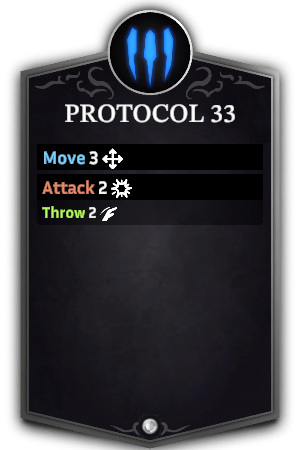
Its Throw action tosses players next to Spiders, letting a Spider use its first attack right away.

Sentinel's Protocol 33 action card: Move 3, Attack 2, Throw 2

Enemy Kit & Utility AI

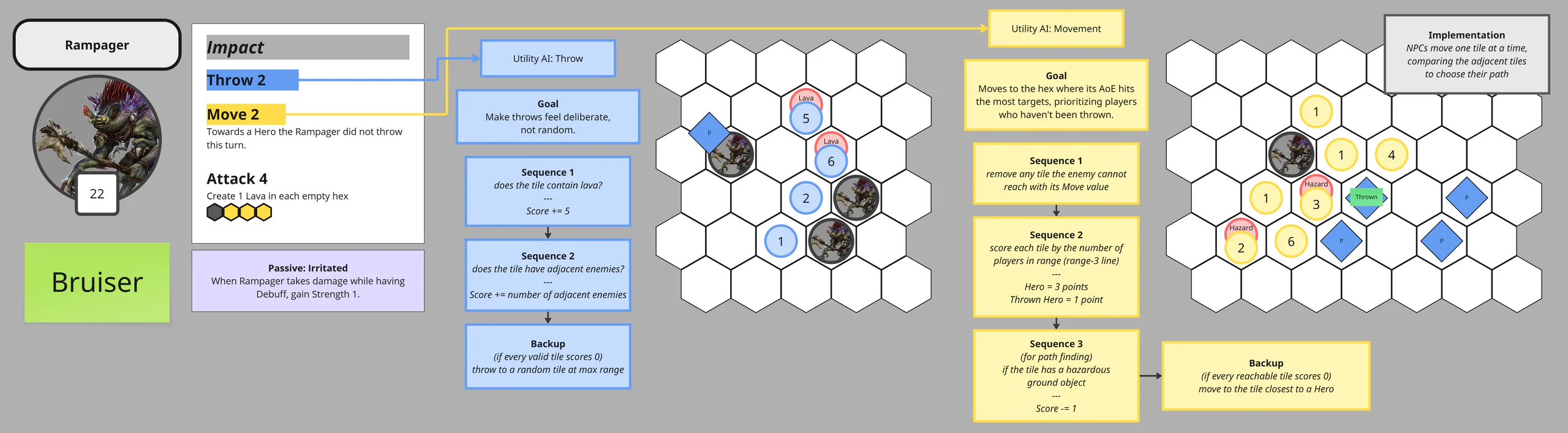
In addition to the combat system, I design each enemy's kit (skills, passive, health and role) and build its AI behavior through utility scoring, defining the math that decides where it moves and who it targets.

Example 3: Rampager

The Rampager throws heroes onto lava and moves to maximize its AoE instead of chasing the closest target, making every action feel deliberate, challenging and alive.

Rampager utility AI: its Throw and Move actions each score hexes in sequence, favoring lava tiles, nearby enemies, and players it hasn't thrown, with a fallback when no tile scores

Selling the Hit

Driving combat and enemy design by defining what each mechanic must communicate visually, such as a tongue or hook to telegraph a pull. From there, I trust Engineering, Animation, 3D Art, and VFX, the experts in their craft, to decide how to bring it to life.

Through iteration, I give feedback on timing, silhouettes, camera shake, and effects, working with the team until every action reads clearly and lands with weight.

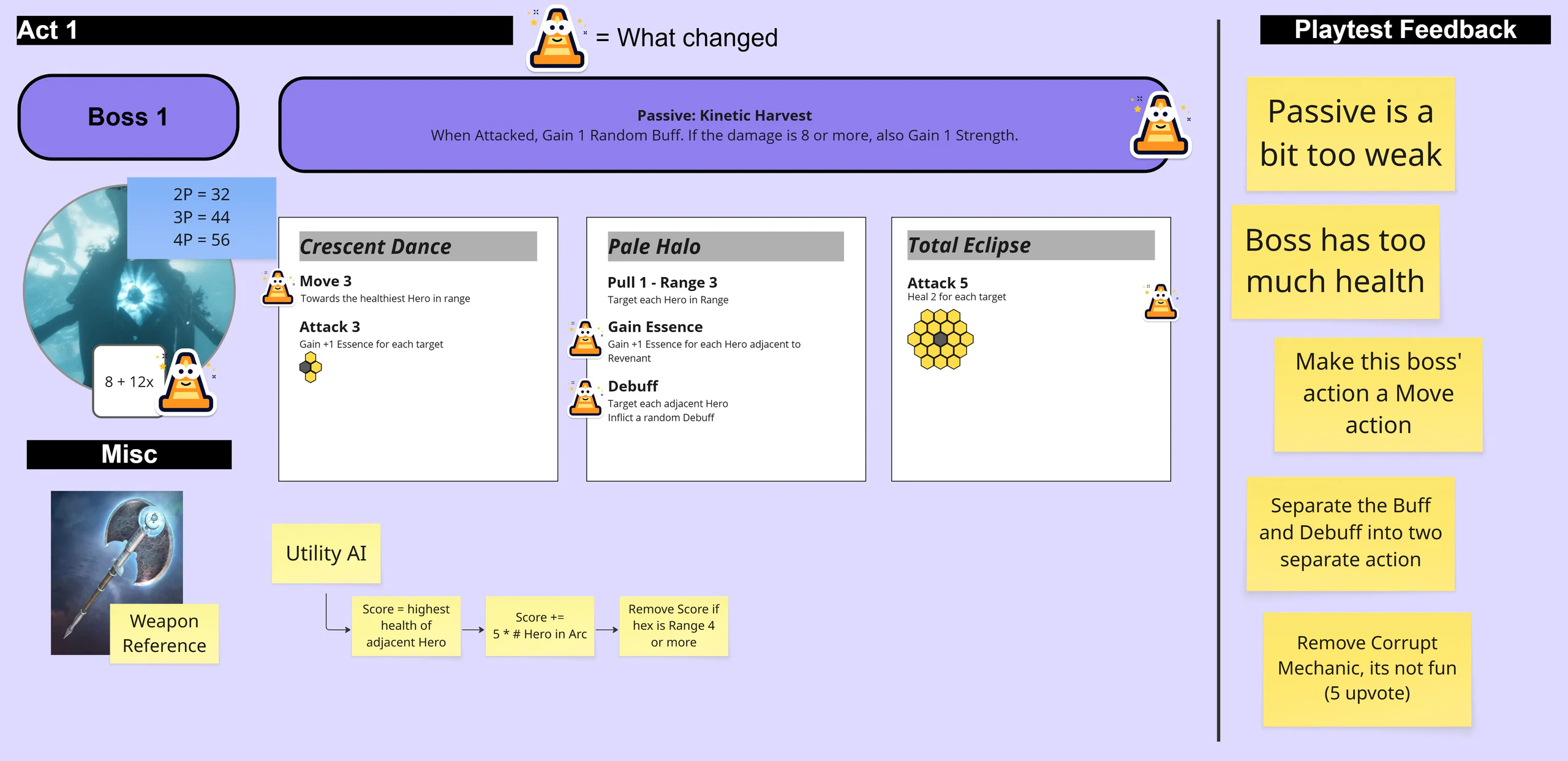
Boss design board: the Act 1 boss's passive and three action cards, its utility AI scoring, and the playtest feedback behind each change

SYSTEMS DESIGN

Design Thesis

Beyond the core systems, smaller systems are designed to evolve a run without disrupting it. They add mid-run challenge without changing familiar content, keep new content worth engaging with, and place players in control of their run.

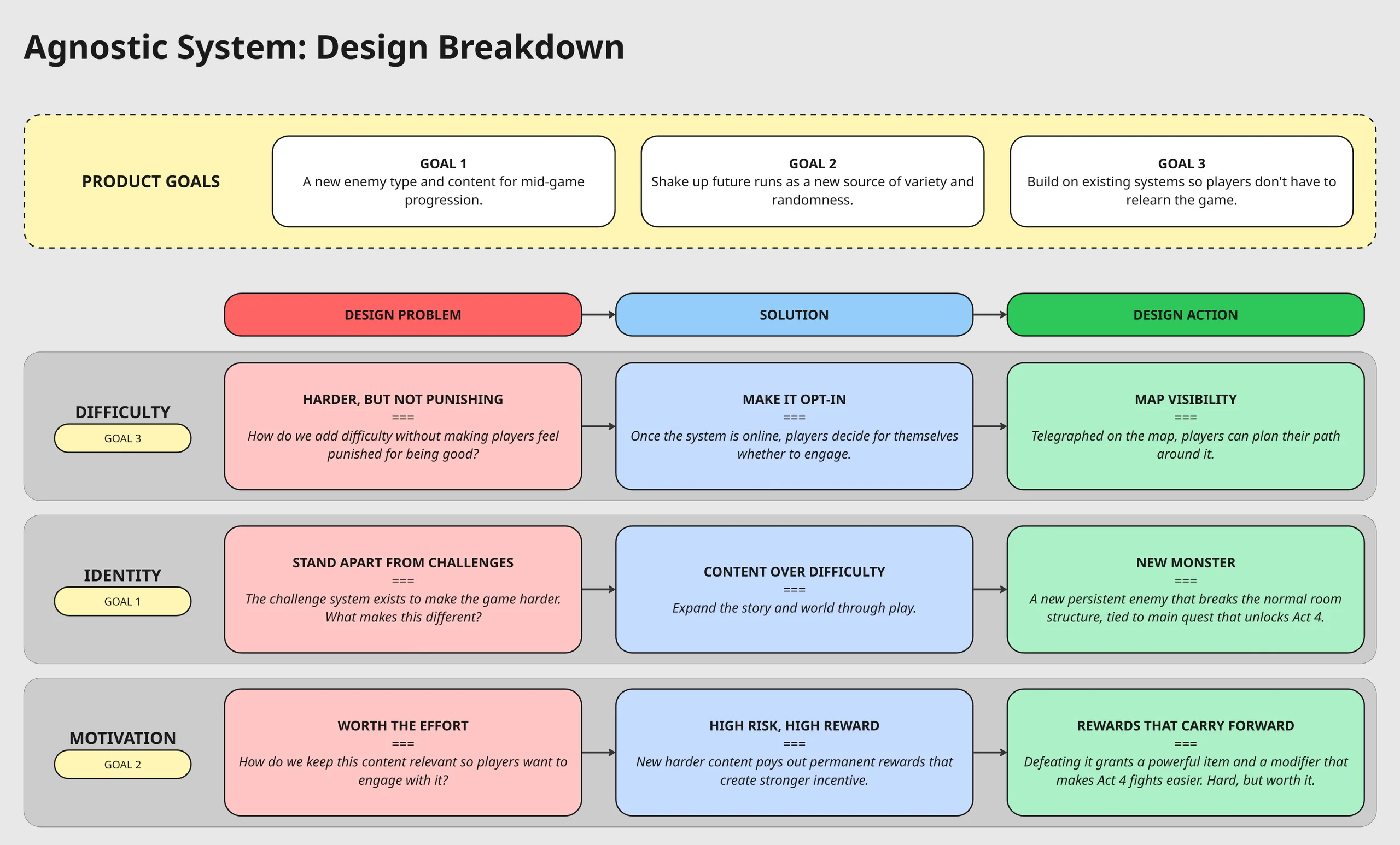
Agnostic System design breakdown: three product goals, and the difficulty, identity, and motivation problems each traced to a solution and a design action
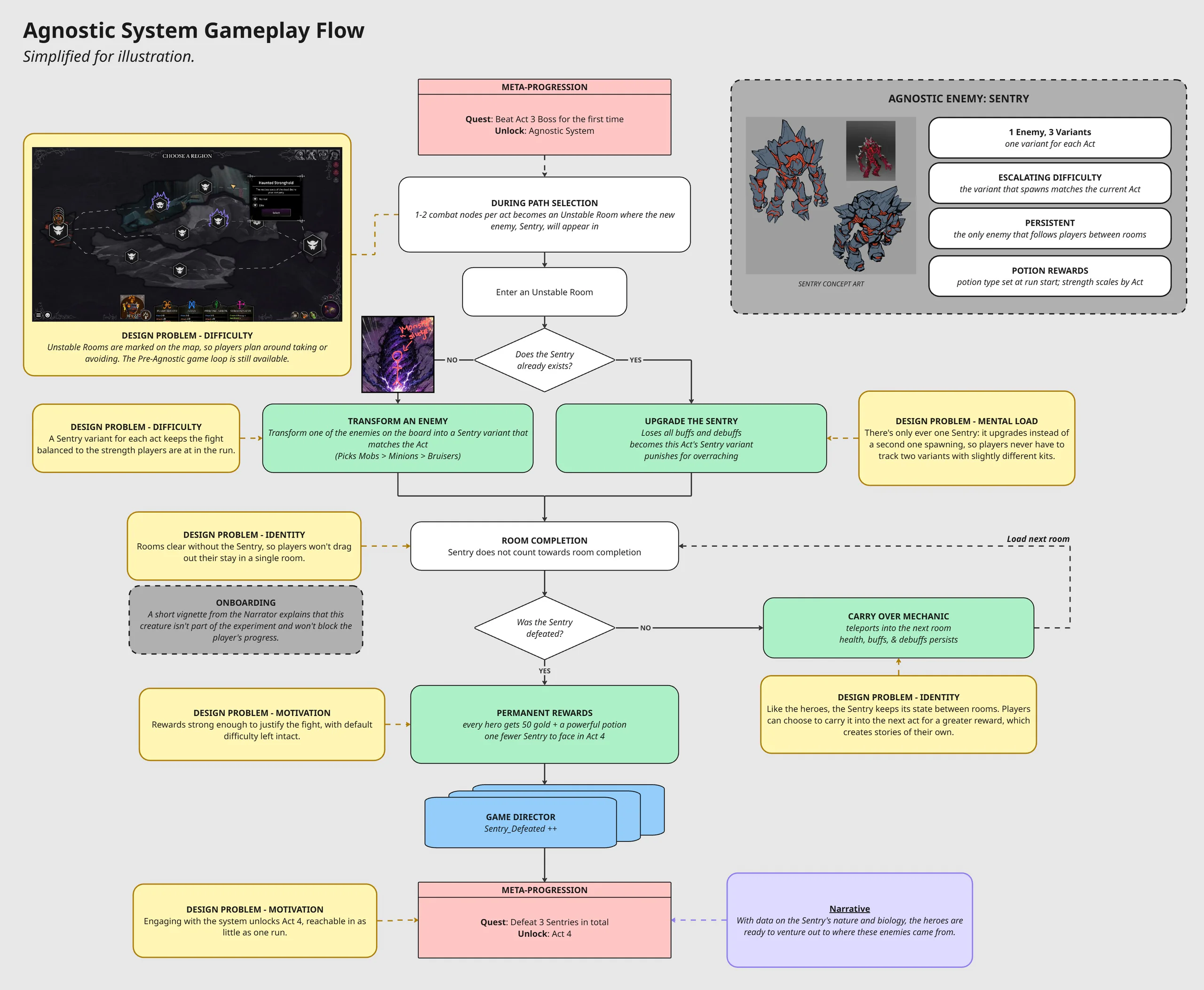
Agnostic System gameplay flow: Unstable Rooms on the map spawn or upgrade the Sentry, which carries over between rooms until defeated for permanent rewards, with design-problem notes beside each step